
From Israel to the Nations: God’s Covenant Promises Fulfilled
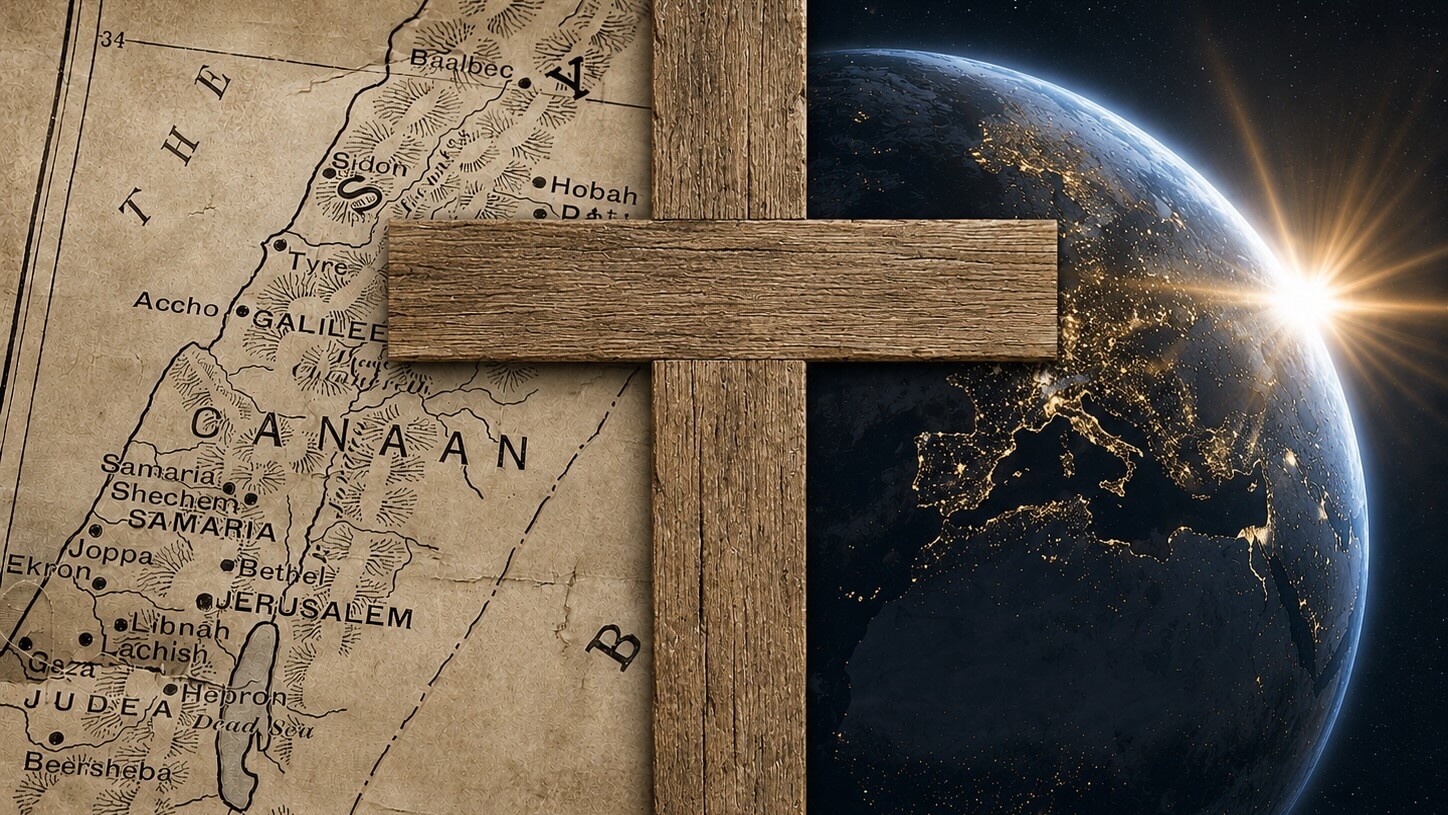
Credits: Left image: sterlsev / iStock.com; Right image: loops7 / istock.com
Disclosure: This post may contain affiliate links, meaning Beautiful Christian Life LLC may get a commission if you decide to make a purchase through its links, at no cost to you.
If we are going to understand God’s overarching redemptive plan from Genesis to Revelation, it is essential to understand the difference between the old (Mosaic) covenant and the new covenant. Misunderstandings of this difference have led to much confusion in the church over the centuries, causing people not only to attempt to apply certain old covenant stipulations, blessings, and curses to the new covenant era but also to believe that God has one plan of salvation for the Jews and another for the Gentiles.
Looking at two key events in the New Testament will help us understand the cataclysmic nature of Jesus’ death and resurrection, which brought the old covenant to an end and ushered in the new covenant. These two events are John’s baptism (Matt. 3:1-11; Mark 1:2-8; Luke 3:1-17) and Jesus’ interaction with the Syrophoenician woman (Matthew 15:21-28; Mark 7:24-30).
John’s baptism is a prophetic call to Israel at the close of the old covenant era.
As we begin to read the New Testament, the Messiah has arrived and the kingdom is at hand. Yet, the opening chapters of the Gospels unfold under the old covenant administration. John the Baptist appears as the final great prophet of the old age, a voice crying out in the wilderness in fulfillment of Isaiah’s promise (Isa. 40:3). In the Gospel of Mark, we read that John proclaimed “a baptism of repentance for the forgiveness of sins” (Mark 1:4) to Israel, God’s covenant people:
And all the country of Judea and all Jerusalem were going out to him and were being baptized by him in the river Jordan, confessing their sins. (Mark 1:5)
John summons the people of Israel—those who possess the law, the temple, and the promises—to prepare for their Messiah. His warning is urgent:
“Even now the axe is laid to the root of the trees. Every tree therefore that does not bear good fruit is cut down and thrown into the fire.” (Matt. 3:10)
Judgment is near for the nation of Israel, and God’s kingdom is at hand. John’s baptism belongs to the closing phase of the Mosaic administration; it is preparatory and transitional, pointing forward to Jesus Christ, who will baptize with the Holy Spirit. Of Jesus’ impending arrival, John declares:
“I baptize you with water for repentance, but he who is coming after me is mightier than I, whose sandals I am not worthy to carry. He will baptize you with the Holy Spirit and fire.” (Matt. 3:11)
John’s baptism doesn’t rest upon the finished work of Christ or the outpouring of the Spirit at Pentecost. The apostle Paul confirms this distinction in Acts 19:
And Paul said, “John baptized with the baptism of repentance, telling the people to believe in the one who was to come after him, that is, Jesus.” On hearing this, they were baptized in the name of the Lord Jesus. And when Paul had laid his hands on them, the Holy Spirit came on them, and they began speaking in tongues and prophesying. (Acts 19:4-6)
Those who had received only John’s baptism needed to be instructed in the completed work of Christ and to be “baptized in the name of the Lord Jesus.”
Jesus is born under the law and ministers within the structures of the old (Mosaic) covenant.
Paul states plainly in Galatians 4:4 that when the fullness of time had come, God sent forth his Son, “born of woman, born under the law.” We know from Scripture that Jesus fully participated in Israel’s covenant life: He was circumcised, kept the feasts, worshiped at the temple, and obeyed the Mosaic law in every respect. He was born under the law to fulfill it on behalf of all who would trust in him alone for salvation.
This covenantal setting shapes Jesus’ earthly mission. When he sends out the twelve, he instructs them not to go among the Gentiles or Samaritans but instead to the lost sheep of the house of Israel (Matt. 10:5–6).
We see this boundary again when the Syrophoenician woman pleads with Jesus for her daughter:
And behold, a Canaanite woman from that region came out and was crying, “Have mercy on me, O Lord, Son of David; my daughter is severely oppressed by a demon.” But he did not answer her a word. And his disciples came and begged him, saying, “Send her away, for she is crying out after us.” He answered, “I was sent only to the lost sheep of the house of Israel.” (Matt. 15:22-24)
Jesus’ words to the woman, “I was sent only to the lost sheep of the house of Israel” (Matt. 15:24) are indicative of his mission, not his lack of care for her daughter. God’s “covenants, the giving of the law, the worship, and the promises” in the Old Testament were entrusted to Israel (Rom. 9:4–5). The Messiah came through Israel and first to Israel, and God’s promise that through Abraham all the nations would be blessed (Gen. 12:3) would be fulfilled in God’s perfect timing.
In Jesus’ encounter with the Syrophoenician woman, though, the coming expansion is already visible. Our Lord grants her request and commends her faith:
But she came and knelt before him, saying, “Lord, help me.” And he answered, “It is not right to take the children’s bread and throw it to the dogs.” She said, “Yes, Lord, yet even the dogs eat the crumbs that fall from their masters’ table.” Then Jesus answered her, “O woman, great is your faith! Let it be done for you as you desire.” And her daughter was healed instantly. (Matt. 15:25-28)
The cross and resurrection fulfill the old covenant and inaugurate the new covenant.
In his death on the cross, Christ bears the curse of the law (Gal. 3:13). He accomplishes what Israel failed to accomplish. He fulfills the righteousness required under the Mosaic administration and establishes the new covenant promised by the prophets (Jer. 31:31-34; see also Isa. 42:6; Ezek. 36:25-27).
The sacrificial system has been fulfilled in the atoning death of Christ. The tearing of the temple curtain when Jesus died on the cross (Matt. 27:51; Mark 15:38; Luke 23:45) signals that the old shadows have given way to their substance. The author of Hebrews draws out the meaning of this moment:
Therefore, brothers, since we have confidence to enter the holy places by the blood of Jesus, by the new and living way that he opened for us through the curtain, that is, through his flesh, and since we have a great priest over the house of God, let us draw near with a true heart in full assurance of faith, with our hearts sprinkled clean from an evil conscience and our bodies washed with pure water. (Heb. 10:19-22)
After Jesus’ resurrection, the expansion of God’s kingdom encompasses all the nations.
God’s redemptive plan unfolded to Israel first and then expanded to the nations. While God’s moral law is always in force, the civil and ceremonial aspects of the old (Mosaic) covenant have been abrogated by Christ’s death and resurrection. Likewise, the ethnic and geographic boundaries that marked God’s people are now no more. The risen Christ commands the gospel to go to every nation and ethnicity:
“All authority in heaven and on earth has been given to me. Go therefore and make disciples of all nations, baptizing them in the name of the Father and of the Son and of the Holy Spirit.” (Matt. 28:18–19)
Acts records this unfolding expansion. At Pentecost, Jews from many lands hear the mighty works of God in their own languages (Acts 2). The gospel moves into Samaria (Acts 8). The Spirit falls upon Gentiles in the household of Cornelius (Acts 10), teaching Peter that God shows no partiality. The dividing wall between Jew and Gentile is broken down (Eph. 2:14-16). In Christ, people from every tribe and tongue are united, being “members of the same body” (Eph. 3:6).
The Abrahamic promise of blessing to the nations is fulfilled in Christ as the new covenant gathers a people from every nation into one body.
The new covenant is not a new way of salvation; it is the fulfillment and widening of promises long ago given to Abraham—that in his offspring all the families of the earth would be blessed (Gen. 12:3; 18:18; 22:18). As Zach Keele and Michael Brown explain in Sacred Bond: Covenant Theology Explored, the Abrahamic covenant had two stages of fulfillment:
God promised Abraham an offspring and a land, and he fulfilled these promises in two stages. The first stage of fulfillment is in the old covenant, with the nation Israel and the land of Canaan. Israel was the promised offspring, and Canaan was the Promised Land. These promises, however, were not an end in themselves, for God also promised Abraham that through him he would bless the nations. The second, and greater, stage of fulfillment is in the new covenant. God’s promise of an offspring is fulfilled in believers and their children, and his promise of a land looks forward to the greater fulfillment of the new heavens and new earth. The nation of Israel and the land of Canaan were only temporary, first-level fulfillments of God’s promises to Abraham. With the coming of Christ, a greater fulfillment has occurred. (p. 88)
Whereas the old covenant was made between God and a specific nation and tied to a physical land, the new covenant includes all nations and ethnicities, and its realm is the eternal kingdom of God.
There is one gracious promise unfolding across redemptive history.
God first promised to send a savior to crush the head of the serpent in Genesis 3:15, and this promise is called the covenant of grace. God ratified this covenant with Abraham in Genesis 15, and we see administrations of God’s covenant of grace in the old (Mosaic) covenant in the Old Testament and in the new covenant in the New Testament.
What the people of Israel saw in shadowy form under the old covenant, we see much more clearly on this side of the cross under the new covenant. The Old Testament saints did not fully understand how God would accomplish redemption in Christ, yet like Abraham they trusted that he would keep his promises—a faith the author of Hebrews commends in the “Hall of Faith” (Heb. 11):
These all died in faith, not having received the things promised, but having seen them and greeted them from afar, and having acknowledged that they were strangers and exiles on the earth. (Heb. 11:13)
While Moses was the mediator of the old covenant, Christ is the mediator of the new covenant.
The Mosaic covenant was extremely important for two reasons: First, it instructed the nation of Israel (and us) regarding the impossibility of keeping God’s law perfectly and our need for a Savior in order to live in the presence of our holy God. Second, it provided the setting for Christ to come as the perfect Son of Israel who would obey God’s law in all things and be the once-for-all sacrifice for sin.
The agreement made on Mount Sinai between God and national Israel, with Moses as the mediator, has been replaced by the new covenant made with believers and their children, with Christ as the mediator. God’s moral law is still a guide for Christians on how to live uprightly, but Christians are righteous before God in Christ alone—not because of their own works.
The new covenant is far superior to the old covenant, as the author of Hebrews explains:
But as it is, Christ has obtained a ministry that is as much more excellent than the old as the covenant he mediates is better, since it is enacted on better promises. For if that first covenant had been faultless, there would have been no occasion to look for a second. (Heb. 8:6-7)
The author of Hebrews goes on to remind us of Christ’s once-for-all perfect atonement for sin, something that could never have been accomplished by animal sacrifice:
And every priest stands daily at his service, offering repeatedly the same sacrifices, which can never take away sins. But when Christ had offered for all time a single sacrifice for sins, he sat down at the right hand of God, waiting from that time until his enemies should be made a footstool for his feet. For by a single offering he has perfected for all time those who are being sanctified. (Heb. 10:11-14)
Whereas the old covenant was conditional and breakable, the new covenant is unbreakable and eternal, sealed by the perfect blood of Christ (Heb. 9:11-15).
None of the Israelites were ever pure before God through the keeping of the old (Mosaic) covenant, because it was impossible for anyone to obey it perfectly. They were only declared righteous by faith alone, just as their father Abraham was (Gen. 15:6).
In the new covenant era, the gospel of Jesus Christ is for all people without distinction.
There are not two ways of salvation, one for Jews and one for Gentiles. There is one Redeemer and one saving promise unfolding throughout different covenantal administrations. All who have ever been saved—before or after Christ’s coming—are saved by Christ’s redemptive work alone, and through faith they truly share in his saving benefits.
Under the old covenant administration, the focus was national and typological. The Messiah, Christ Jesus, came through Israel, ministered within Israel, and fulfilled Israel’s calling. Under the new covenant administration, the blessings secured by Christ flow outward to every nation and ethnicity. The priority given to Israel in Christ’s earthly ministry displays God’s covenant faithfulness. The global proclamation of the gospel after the resurrection displays the breadth of God’s mercy.
If we disconnect these stages, confusion follows. John’s baptism was not Christian baptism in its full new covenant sense. Jesus’ focus on the lost sheep of Israel in his encounter with the Syrophoenician woman was not ethnic exclusivity but covenantal faithfulness.
The gospel of Jesus Christ is for all peoples without distinction. No ethnicity has privileged access. No nation stands outside the invitation. The risen Christ reigns and he commands that repentance and forgiveness of sins be proclaimed in his name to all nations. What began with John the Baptist calling Israel to repentance is now God’s gospel invitation offered to all until Christ’s return:
The Spirit and the Bride say, “Come.” And let the one who hears say, “Come.” And let the one who is thirsty come; let the one who desires take the water of life without price. (Rev. 22:17)
Through Israel’s Messiah, Christ Jesus our Lord, God continues to gather a people from every nation and ethnicity for his glory.
This article is adapted from “God’s Covenant Promises: From Israel to the Nations” in Beautiful Christian Life’s March 2026 newsletter, “Covenant.”
Related Articles:
- 8 Covenants in the Bible and What They Mean for You Personally Today
- 2 Kinds of Covenants in the Bible You Need to Know
- 3 Precious Promises of the New Covenant
- Who Is Representing You—Adam or Jesus?
- Common Grace vs. Special Grace — What’s the Difference?
- 12 Reasons Why Jesus Meant It When He Said, “It Is Finished”
- About the Author
- Latest Posts

Le Ann Trees is a writer, editor, speaker, wife, mom, and grandma. She is the former managing editor of White Horse Inn’s Core Christianity website and Bible studies and the former dean of women for Westminster Seminary California from where she also earned a Master of Arts in Theological Studies in 2014. Le Ann is managing editor of Beautiful Christian Life.
