
15 Key Christian Books for Your 2026 Reading List

Photo Credit: Aja Koska / iStock.com
Disclosure: This post may contain affiliate links, meaning Beautiful Christian Life LLC may get a commission if you decide to make a purchase through its links, at no cost to you.
Kickstart the new year by adding these key books on the Christian faith to your 2026 reading list, and they make great Christmas gifts too! (Click here for the 2025, 2024, 2023, 2022, 2021, 2020, 2019, and 2018 lists.)
1. Happy Lies: How a Movement You (Probably) Never Heard Of Shaped Our Self-Obsessed World by Melissa Dougherty (Zondervan)
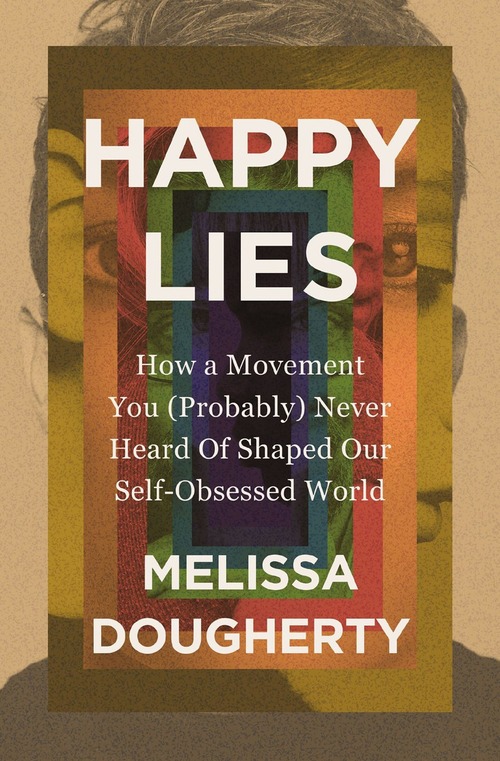
Has someone ever told you, “I’m spiritual, not religious”? Many Christians have never heard of the New Thought movement, yet its ideas lie behind everything from positive-thinking spirituality to manifesting prosperity. In Happy Lies, Melissa Dougherty traces how this nineteenth-century philosophy has quietly shaped American culture and influenced the way many people—even in the church—think about truth, emotion, and personal power. Dougherty uncovers how the New Thought movement connects to relativism, identity confusion, self-help spirituality, toxic affirmation, the Word of Faith movement, progressive Christianity, and even church-growth models.
Drawing on her past involvement in New Thought and her extensive work as a Christian apologist, Dougherty is uniquely equipped to show why New Thought’s promises feel so compelling, why they ultimately fail, and how their language can subtly distort the gospel by elevating intuition and self-determination over dependence on God:
People embrace New Thought beliefs through inspiration or desperation. They are thirsty for these ideas because they’re desperate to change their situation. They’re searching for wholeness. But New Thought offers a counterfeit. They’re seeking meaning. But New Thought offers more confusion. What Jesus has to offer is truly what they are looking for. He doesn’t always take away our pain, but he bears it with us. He’s the only one who can truly make us whole in our brokenness. (pp. 219-220)
Dougherty’s Happy Lies is a must-read guide for discerning the spiritual messages that surround us and for recovering a distinctly Christian vision of reality. Click here for Amazon link.
2. Enjoy Your Prayer Life by Michael Reeves (10 Publishing)

What does our prayer life say about our spiritual maturity? Likely way more than we want to know, but what we need to know to grow in our faith. In Enjoy Your Prayer Life, pastor and author Michael Reeves manages to strip away both the guilt and the confusion that so often surround prayer. With warmth and welcome honesty, Reeves invites Christians to see prayer not as a burdensome duty but as a gift flowing from our union with Christ. Reeves reminds us that prayer reveals far more than our habits—it exposes the true affections of our hearts:
In one sense your prayer life is disgustingly revealing: it does reveal who you really are. For all your talk and theory of faith—you can affirm the truth of prayer and know that God is good—your prayer life reveals how much you really want communion with God and how much you really depend on him. I stress it absolutely does not tell you about your security as an unrejectable child of God, but it does tell you, very accurately, how much of a baby you are spiritually, how much of a hypocrite you are, and how much you actually love the Lord. Thus if your tendency is to think you’re rather wonderful, just remember your prayer life. (p. 10)
Yet this little book is not meant to condemn. Reeves points us again and again to the joy of knowing God as Father through the Spirit of adoption. He shows how Christ’s own prayer life becomes the source and pattern of ours, how delight grows where duty once dominated, and how the gospel frees us from performing for God and instead draws us into communion with him. Encouraging and richly devotional, this is a book you can read in under an hour yet benefit from for years. It’s an ideal companion for any believer who longs to move from guilt and striving to confidence, intimacy, and joy in the presence of God. Click here for Amazon link.
3. The Heidelberg Catechism: A Historical, Theological, and Pastoral Commentary by R. Scott Clark (Lexham Academic)
Few documents in church history have shaped Protestant faith and practice as profoundly as the Heidelberg Catechism, and few modern works explain it with the clarity and care of R. Scott Clark’s recently released The Heidelberg Catechism: A Historical, Theological, and Pastoral Commentary. Drawing on decades of scholarship, Clark places the Heidelberg Catechism in its sixteenth-century context while showing why its warm, pastoral theology remains vital for believers today.
Catechisms teach foundational biblical truths through a question-and-answer format, and the Heidelberg Catechism is structured around the “three Gs”: guilt (our sin and misery), grace (God’s salvation in Christ), and gratitude (our thankful obedience). Clark writes,
The catechism was written to preserve the gospel of justification and salvation by grace alone (sola gratia), through faith alone (sola fide), on basis of the imputation of the finished work of Christ alone in a time when that gospel was being questioned. (p. 30)
Clark’s exposition unpacks how each Lord’s Day unfolds these doctrines with pastoral warmth, grounding believers in the comfort, assurance, and obedience that flow from union with Christ. With 150 questions and answers divided into 52 Lord’s Day sections, this commentary is ideal for personal reading, family devotions, small group studies, and sermon preparation. The beloved Heidelberg Catechism continues to nurture discipleship and devotion today, and Clark’s work is a valuable resource for pastors, teachers, and anyone seeking to deepen their grasp of the Christian faith and grow in their love for Christ. Click here for Amazon link.
4. Just Do Something: A Liberating Approach to Finding God’s Will by Kevin DeYoung (Moody Publishers)
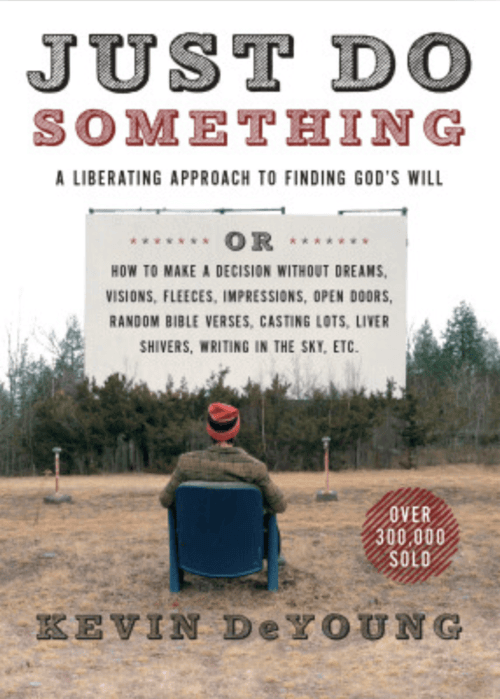
Many Christians live with the fear of making the “wrong” choice, as if God’s will were a hidden blueprint we must somehow decode. In Just Do Something, Kevin DeYoung dismantles this anxiety with biblical clarity and pastoral good sense. He argues that God does guide his people—but not by requiring them to decipher secret signs or find a perfect path. As he writes,
God does have a specific plan for our lives, but it is not one that He expects us to figure out before we make a decision… we should stop thinking of God’s will like a corn maze, or a tightrope, or a bull’s-eye, or a choose-your-own-adventure novel. (pp. 22–23)
Instead of chasing impressions or waiting for a mystical “green light,” DeYoung urges Christians to pursue godliness, seek wisdom, and make decisions with confidence in God’s providence. He reminds readers that the Lord’s will for their lives is first about who they are becoming, not the endless details they fear getting wrong. Clear, concise, and immensely freeing, Just Do Something helps believers trade paralysis for purposeful living and walk forward trusting that God’s steady hand is already at work in every step. Click here for Amazon link.
5. Maturity: Growing Up and Going On in the Christian Life
by Sinclair B. Ferguson (Banner of Truth)
In Maturity: Growing Up and Going On in the Christian Life, author and theologian Sinclair B. Ferguson shows that Christian maturity is not a special achievement reserved for a few but the ordinary pattern of life for every believer—a steady, Spirit-enabled movement toward Christlikeness shaped by Scripture, prayer, obedience, and perseverance. With the warmth of a seasoned shepherd and the doctrinal clarity of a trusted theologian, Ferguson helps readers understand both the privileges and the responsibilities of life in Christ, emphasizing that genuine growth is impossible apart from the Word of God and the illuminating work of the Spirit. Ferguson writes,
[The Christian life] is always lived by faith, by dependence on the Scriptures and the Spirit’s help enabling us to see how they apply to our lives. The Bible does not come to us in the form of a series of answers to our set questions. It comes in its own context (which we need to understand) and speaks into our context (which we need to be able to interpret) in order to lead us into the will of God. (p. 90)
Rich in insight and deeply practical, Maturity guides believers through themes such as spiritual discernment, resisting temptation, persevering through trials, cultivating holiness, and living faithfully within the church. It is an invitation to grow—not by self-effort but by anchoring one’s life more firmly in Christ and His Word. Ferguson’s Maturity is an excellent resource for Christians who long to press on in their walk with Christ and continue “going on” in faith, hope, and love. Click here for Amazon link.
6. Bullies and Saints: An Honest Look at the Good and Evil of Christian History by John Dickson
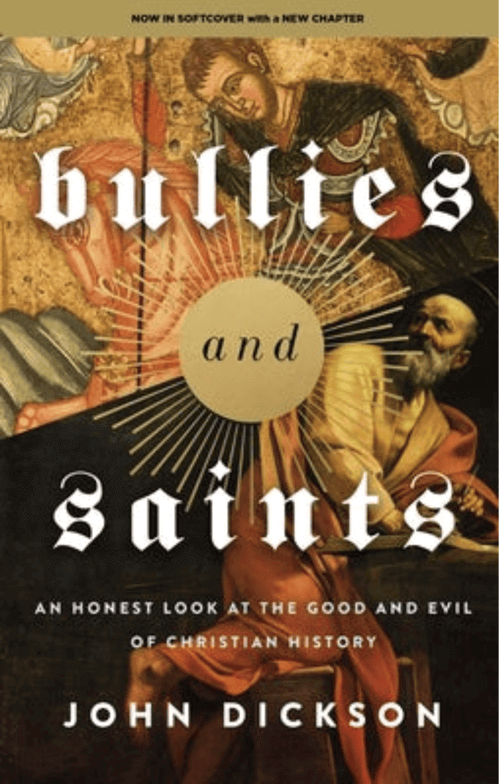
In an age when Christian hypocrisy is a common charge and the failures of the church are regularly spotlighted, historian John Dickson offers something rare: an honest, unflinching, and deeply fair account of both the beauty and the brokenness of Christian history. In his acclaimed book Bullies and Saints: An Honest Look at the Good and Evil of Christian History, Dickson writes,
Condemning the church has become an art form among contemporary skeptics. Secular society is not so good at recognising its own participation in the hatred and violence common to our humanity. We rightly decry the viciousness of the Inquisitions but turn a blind eye to the ‘virtuous terror’ of the Enlightenment…. The Bible, of course, says that we all ‘fall short’ (the strict meaning of the word ‘sin’). (p. 281)
Bullies and Saints does not excuse the sins of the church, nor does it allow critics to reduce two millennia of Christian witness to its darkest moments. Instead, Dickson traces the history of Christianity from the early church to the present, showing how the gospel has inspired mercy, creativity, and compassion—even as Christians have at times acted in ways that tragically contradicted it.
What sets this book apart is Dickson’s ability to pair rigorous scholarship with pastoral clarity. He places infamous episodes such as the Crusades and the Inquisition alongside the profound contributions of Christian faith to hospitals, education, human dignity, charity, and the abolition of slavery. By refusing both defensiveness and cynicism, he helps readers see Christian history not as a tidy success story but as a living testimony to a perfect Savior working through imperfect people. Bullies and Saints is a refreshing and deeply encouraging read, one that equips believers to engage the criticisms of our cultural moment with both humility and confidence in the gospel’s enduring power. Click here for Amazon link.
7. Then Sings My Soul: 150 of the World’s Greatest Hymn Stories by Robert J. Morgan (Thomas Nelson)
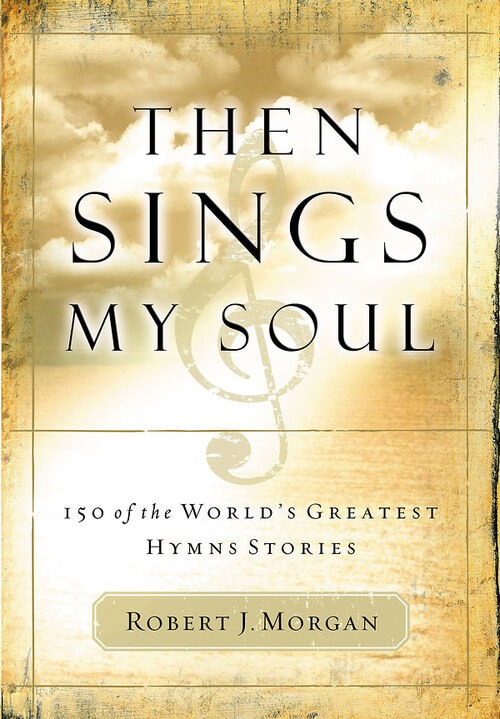
Behind every great hymn lies a story—often one filled with providence, suffering, perseverance, and unexpected grace. In Then Sings My Soul, pastor Robert J. Morgan brings together 150 of these stories, pairing each account with the hymn itself so readers can savor the lyrics, understand their origins, and encounter their theology with fresh appreciation. Rather than searching multiple sources to learn the background of beloved hymns, Morgan gives us a beautifully organized treasury that can serve as devotional reading, family worship material, or a springboard for deeper appreciation of the church’s musical heritage.
From well-known hymns such as “Amazing Grace” and “Rock of Ages” to lesser-known gems like “Like a River Glorious” and “The King of Love My Shepherd Is,” these stories remind us that the church’s song has long been shaped by ordinary believers sustained by an extraordinary God. One remarkable account involves Edward Perronet’s “All Hail the Power of Jesus’ Name.” Morgan writes,
Edward Perronet’s hymn, “All Hail the Power,” has earned him an indelible place in the history of church music. It also has a place in missionary history, being greatly used in evangelistic endeavors. Rev. E. P. Scott, for example, missionary to India, wrote of trying to reach a savage tribe in the Indian subcontinent. Ignoring the pleadings of his friends, he set off into the dangerous territory. Several days later, he met a large party of warriors who surrounded him , their spears pointed at his heart. Expecting to die at any moment, Scott took out his violin, breathed a prayer, closed his eyes, and began singing, “All Hail the Power of Jesus’ Name!” When he reached the words, “Let every kindred, every tribe,” he opened his eyes. There stood the warriors, some in tears, every spear lowered. Scott spent the next two years evangelizing the tribe. (p. 77)
Rich in history and worshipful reflection, Then Sings My Soul invites believers to recover the depth, artistry, and spiritual power of historic Christian hymnody. It’s the kind of book that not only teaches the stories behind our faith’s most enduring songs but also helps the church sing them with renewed gratitude and joy. Click here for Amazon link.
8. Parenting: 14 Gospel Principles That Can Radically Change Your Family (with Study Questions) by Paul David Tripp (Crossway)
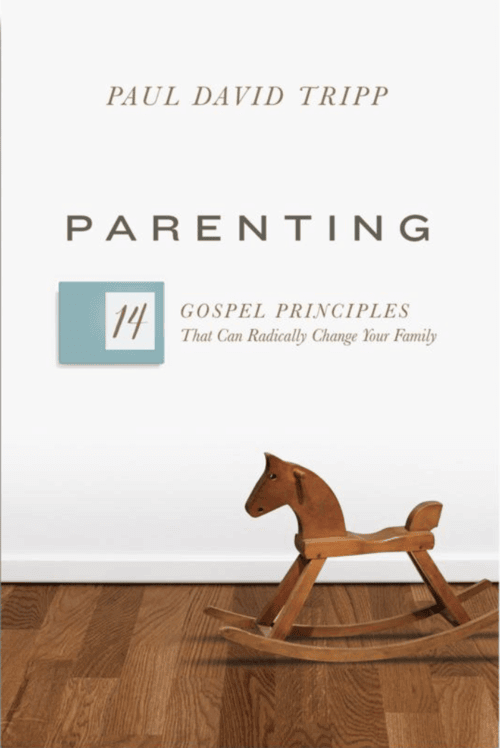
Parenting often feels overwhelming—full of pressure, expectations, and the constant fear of getting it wrong. In Parenting: 14 Gospel Principles That Can Radically Change Your Family, author Paul David Tripp reframes the entire task by grounding it not in technique but in theology. Tripp argues that the most transformative thing parents can embrace is not a new strategy or schedule but a deeper grasp of God’s grace. Tripp writes,
Let me say it now because it will be a theme that will be, in some way, in every chapter of this book. There is nothing more important to consistent, faithful, patient, loving, and effective parenting than to understand what God has given you in the grace of his Son, the Lord Jesus Christ… Understanding God’s grace will change you, and as it changes you, it will change the way you relate to and parent your children. (p. 34)
Throughout the book, Tripp unpacks fourteen principles—”calling,” “grace,” “law,” “inability,” “identity,” “process,” “lost,” “authority,” “foolishness,” “character,” “false gods,” “control,” “rest,” and “mercy”—that help parents see themselves not as owners of their children but as ambassadors of Christ. His approach is both humbling and hope-giving: Parents are liberated from the impossible burden of controlling outcomes and invited instead to participate in God’s ongoing work in their children’s hearts.
Pastoral, practical, and rich with gospel comfort, Tripp’s Parenting helps mothers and fathers move from frustration and fear to a renewed confidence in God’s faithfulness to sanctify us and our children. Click here for Amazon link.
9. Signed, Sealed, Delivered: An Introduction to Covenant Theology by J.V. Fesko (Ligonier Ministries)
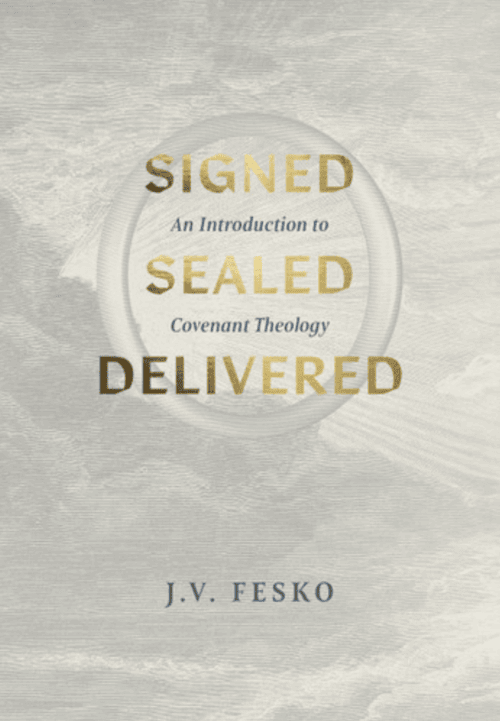
Many Christians have heard the phrase “Reformed Covenant Theology” without ever receiving a clear, accessible explanation of what Scripture teaches about the covenants or why they matter for understanding the whole story of redemption. In Signed, Sealed, Delivered, pastor and theologian J. V. Fesko offers a concise, deeply biblical primer aimed at the “person in the pew.” In just 137 pages, Fesko defines what a covenant is and traces the major covenants of Scripture—the covenants of redemption, works, and grace—before turning to covenant signs and the rich implications this doctrine has for the life of the church. One of the book’s strengths is the clarity with which Fesko explains the relationship between Adam, Christ, and the covenantal structure of salvation. He writes,
The covenant of grace stands in stark contrast to the covenant of works. God gave to Adam the possibility of eternal life on the basis of his obedience. In the covenant of grace, He gives the gift of eternal life by faith in the work of Christ. God does not change Adam’s vocation but instead sends His Son, Jesus, the last Adam, to fulfill Adam’s failed work. The blessings of Christ’s completed work come only to those who believe in Him by grace alone through faith alone. (p. 62)
Fesko’s Signed, Sealed, Delivered is an excellent entry point for anyone who wants to understand how the biblical covenants hold together the entire storyline of Scripture and reveal the unity of God’s saving work in Christ. Whether for personal study, small groups, or church discipleship, this little book provides clarity and insight into the grace of God from Genesis to Revelation. Click here for Amazon link.
10. Happiness: Uncovering the Secret to Everlasting Joy by Randy Alcorn (Tyndale Momentum)
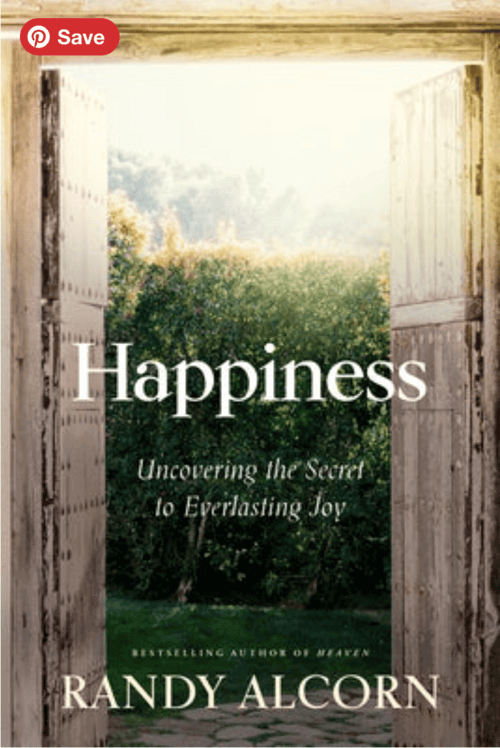
Many Christians have been taught that happiness is unspiritual and temporal, whereas joy is holy and lasting. Author Randy Alcorn challenges that assumption with clarity, biblical depth, and an exuberant sense of delight. In Happiness: Uncovering the Secret to Everlasting Joy, he argues that Scripture does not pit joy and happiness against each other but uses them interchangeably to describe the gladness found in God himself. As he explains,
Depicting joy in contrast with happiness has obscured the true meaning of both words. Joyful people are typically glad and cheerful—they smile and laugh a lot. To put it plainly, they’re happy! (p. 44)
Drawing from hundreds of biblical passages, Alcorn shows how God’s own character, promises, presence, and redemptive work form the bedrock of Christian happiness. He explores why believers often struggle to embrace happiness, how the fall distorts our notions of pleasure, and why the gospel frees us to enjoy God with unashamed delight. At the same time, he never offers cheap cheerfulness; instead, he anchors Christian happiness in the deep, durable joy that endures suffering because it rests in Christ.
Both thoughtful and deeply pastoral, Alcorn’s Happiness recovers a biblical truth often forgotten: that God is the happiest being in the universe, and he invites his children to share in his joy. This is an uplifting, eye-opening read for anyone who needs permission—not from culture, but from Scripture—to pursue happiness in God. Click here for Amazon link.
11. Redemption Accomplished and Applied by John Murray (Eerdmans)
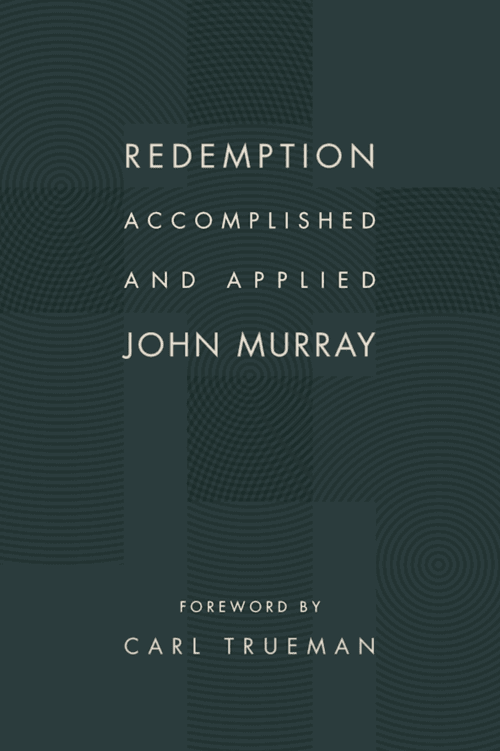
We’re bringing this classic back from our 2019 Key Books list because it remains one of the most clear and doctrinally rich books a Christian can read. In Redemption Accomplished and Applied, John Murray gives believers a panoramic and accessible vision of God’s saving work, from the eternal determination of the Father, to the finished work of Christ, to the Spirit’s gracious application of redemption to every believer.
The book, under 200 pages in length, unfolds in two masterful parts. In “Redemption Accomplished,” Murray expounds the atonement: its necessity, its nature, its perfection, and its extent. He lifts our eyes from ourselves and anchors them squarely in Christ’s objective, once-for-all work on the cross. In “Redemption Applied,” he traces the biblical order of salvation with clarity seldom matched, showing how the Holy Spirit brings sinners from death to life and carries them all the way to glory. Murray writes,
Sanctification is an aspect of the application of redemption. In the application of redemption there is order, and the order is one of progression until it reaches its consummation in the liberty of the glory of the children of God (Rom. 8:21, 30). Sanctification is not the first step in the application of redemption; it presupposes other steps such as effectual calling, regeneration, justification, and adoption. All of these bear intimately upon sanctification. (p. 149)
To study this book is to come away with fresh wonder at the God who saves sinners and to gain a vocabulary shaped not by trends but by Scripture itself: regeneration, effectual calling, faith and repentance, justification, adoption, sanctification, perseverance, union with Christ, and glorification. Murray’s Redemption Accomplished and Applied belongs on every Christian’s bookshelf, which is why we’re delighted to feature it again for 2026. Click here for Amazon link.
12. Practical Religion by R. C. Ryle (Banner of Truth)
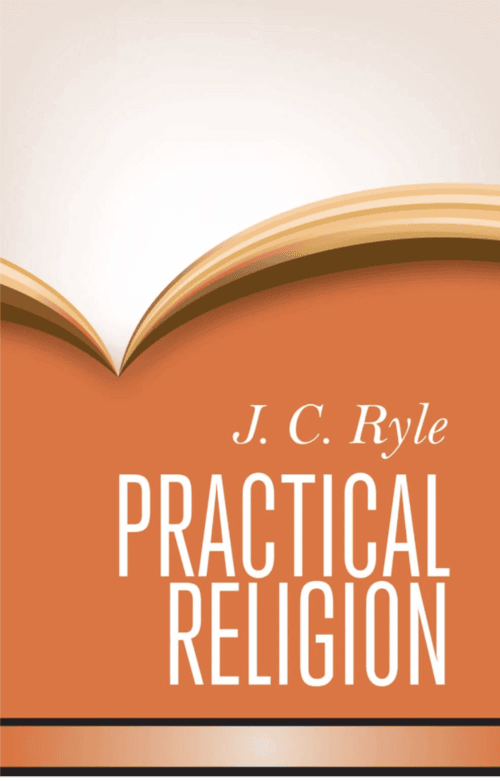
Few writers speak as directly to the conscience as English pastor J. C. Ryle, and Practical Religion remains one of his most searching works. First published in the nineteenth century yet remarkably timeless, this collection of pastoral essays calls readers to a Christianity that shows itself in watchfulness, prayer, holiness, stewardship, and love for Christ. In a culture often content with nominal belief or outward spirituality, Ryle presses his readers to examine the true condition of their hearts. As he writes,
What do I mean when I use the word “real.” I mean that which is genuine, and sincere, and honest, and thorough… “Real” religion is not mere show, and pretense, and skin-deep feeling, and temporary profession, and outside work. It is something inward, solid, substantial, intrinsic, living, lasting… What is the character of our religion? Is it real? It may be weak, and feeble, and mingled with many infirmities. That is not the point before us today. Is our religion real? Is it true?” (“Reality!” Book 2; Kindle Edition)
Throughout the book, Ryle blends doctrinal clarity with practical exhortation, addressing topics such as spiritual lukewarmness, Bible reading, self-examination, and the danger of resting in outward forms rather than in Christ himself. His counsel is compassionate yet uncompromising, full of gospel warmth without sentimentality. Ryle’s great concern is that believers cultivate a faith that bears fruit in daily life—a religion not of mere profession but of genuine devotion, rooted in repentance, grace, and obedience.
Practical Religion is ideal for Christians who want to grow in maturity and sincerity of faith. Few books speak as powerfully to both the head and the heart, making this classic as needful today as when it was first written. Click here for Amazon link.
13. Pippa and the Singing Tree: Joining the Song of All Creation by Kristyn Getty (Crossway)
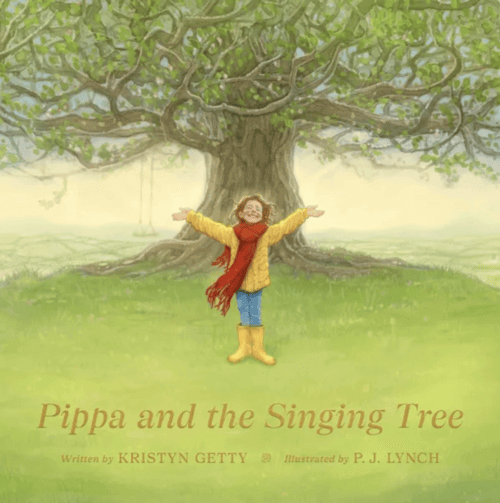
In Pippa and the Singing Tree, singer and songwriter Kristyn Getty invites young readers into a world where creation itself becomes a choir of praise. Paired with the luminous watercolor illustrations of award-winning artist P. J. Lynch, this beautifully crafted picture book captures the wonder of joining our voices with “all that has breath” as we worship the Lord. Written in gentle, musical verse, Getty shows children how every part of God’s world—rain and rivers, trees and birds, branches and leaves—echoes the song of its Maker. We are not silent observers but participants in that joyful refrain:
And what is the song
She and the tree bring?
Their praise to the Lord,
who taught them to sing
of him who makes known
his way and his word;
in all he has made,
his voice can be heard.
The story culminates in a helpful “For Families” section where Getty explains the focus of her book and offers Scripture references that anchor a child’s understanding of why we sing and what creation’s praise reveals about God. The result is a picture book that not only delights the imagination but also forms the heart, helping little ones see the world as a living testimony to its Creator and inviting them to lift their own voices in worship. Warm, poetic, and theologically rich, Pippa and the Singing Tree is a lovely resource for families who want to nurture wonder, gratitude, and praise in the next generation. Click here for Amazon link.
14. Small Preaching: 25 Little Things You Can Do Now To Become A Better Preacher By Jonathan T. Pennington (Lexham Press)
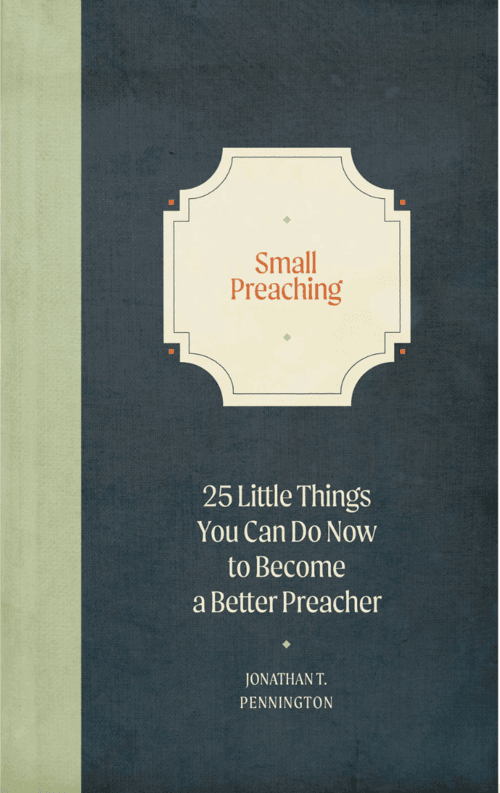
Good preaching is not primarily about polish, charisma, or mastering advanced techniques—it’s about faithfulness in the small, deliberate practices that shape a lifetime of ministry. In Small Preaching, Jonathan T. Pennington offers twenty-five brief, practical reflections designed to help pastors grow as communicators of God’s Word. Rather than overwhelming readers with theory, Pennington focuses on simple habits and small adjustments that can make preaching clearer, more thoughtful, and pastorally attentive. At the heart of the book is a freeing reminder of what preaching actually is and isn’t. Pennington writes,
Preaching is not a game of perfect. No sermon will be perfect, and no lifetime of preaching will be without failures, missteps, missed opportunities, and imperfections. But that’s okay. Our call is to faithfulness, not perfection, to joyful service, not hand-wringing anxiety. This vision for preaching should be lived and refined over the course of our ministries and small steps are the way forward, starting today. (pp. 112–114)
Pennington’s counsel is deeply pastoral: keep learning, stay curious, preach to real people, pray earnestly, prepare wisely, and trust the Spirit who alone brings fruit. Concise yet rich, Small Preaching is a valuable companion for anyone entrusted with the ministry of the Word—reminding preachers that God uses ordinary efforts over many years to shape his people through the foolishness of preaching the cross (1 Cor. 1:18). (You can find a more detailed review of Small Preaching over at the Heidelblog!) Click here for Amazon link.
15. The Godly Man’s Picture: Drawn with a Scripture Pencil by Thomas Watson (Banner of Truth Trust)
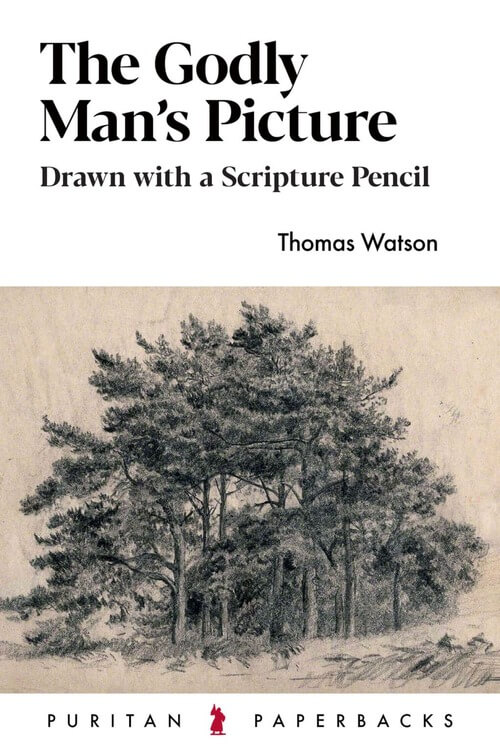
Thomas Watson, one of the most readable of the Puritans, had a gift for taking deep biblical truths and making them both clear and compelling. In The Godly Man’s Picture Watson gives us a practical, heartfelt exploration of what genuine Christian maturity looks like. Instead of vague inspiration or moralistic checklists, Watson offers vivid, Scripture-rooted portraits of sincerity, humility, love for God, hatred of sin, delight in Scripture, and rest in Christ.
What makes this classic so enduring is Watson’s ability to speak honestly to the soul without crushing it. He diagnoses spiritual weakness with pastoral precision, yet always directs readers to the strength found in Christ alone. Nowhere is this clearer than in his reflections on faith:
And the life of a saint is nothing but a life of faith. His prayer is the breathing of faith (James 5:15). His obedience is the result of faith (Romans 16:26). A godly man lives by faith in Christ, as the beam lives in the sun: “I live; yet not I, but Christ lives in me” (Gal. 2:20). A Christian by the power of faith sees above reason, trades above the moon (2 Cor. 4:18). By faith his heart is finely quieted; he trusts himself and all his affairs to God (Psa. 112:7). (p. 27)
Watson’s sharp illustrations, memorable phrasing, and steady emphasis on grace make The Godly Man’s Picture a book that both convicts and comforts. It helps modern readers see that godliness is not a performance but a Spirit-shaped life rooted in Christ and nourished by his Word. This is a classic worth returning to repeatedly and a powerful companion for anyone seeking to grow in spiritual depth, stability, and joy. Click here for Amazon link.
Related Articles:
- 15 Key Christian Books for Your 2025 Reading List
- 15 Key Christian Books for Your 2024 Reading List
- 15 Key Christian Books for Your 2023 Reading List
- 15 Key Christian Books for Your 2022 Reading List
- 15 Key Christian Books for Your 2021 Reading List
- 15 Key Christian Books for Your 2020 Reading List
- 15 Key Christian Books for Your 2019 Reading List
- 12 Key Christian Books for Your 2018 Reading List
- 10 Must-Read Books by the Puritans for Christians Today
- About the Author
- Latest Posts

